Kurucsai Plastic relies on Gneuss MRS technology to increase material flexibility and energy efficiency
By expanding its production capacity, the Hungarian thermoforming specialist Kurucsai Plastic has taken an early step towards meeting the future requirements of the packaging industry. Since the beginning of 2025, the company has been producing PET sheet for food packaging on a Gneuss MRS extrusion line. The investment was made to increase material flexibility, reduce energy consumption during extrusion and create the basis for processing food-grade recycled PET.
Originally established as part of an agricultural business, the company initially produced thermoformed packaging for its own fruit and vegetable products. Today, it also supplies customers throughout the food industry. As production capacities continued to expand, the company gradually converted its sheet production from polypropylene (PP) to polyethylene terephthalate (PET). This transition was driven by increasing requirements for recyclable packaging and the growing use of recycled content within the European circular economy. At the same time, the company aims to become less dependent on raw material availability and price fluctuations by being able to process a wide range of PET feedstocks.
The change to PET, however, introduced a major processing challenge. PET is hygroscopic and readily absorbs moisture from the surrounding environment. In conventional extrusion processes, the material must therefore be dried before processing to ensure consistently high sheet quality—particularly when recycled material is used.
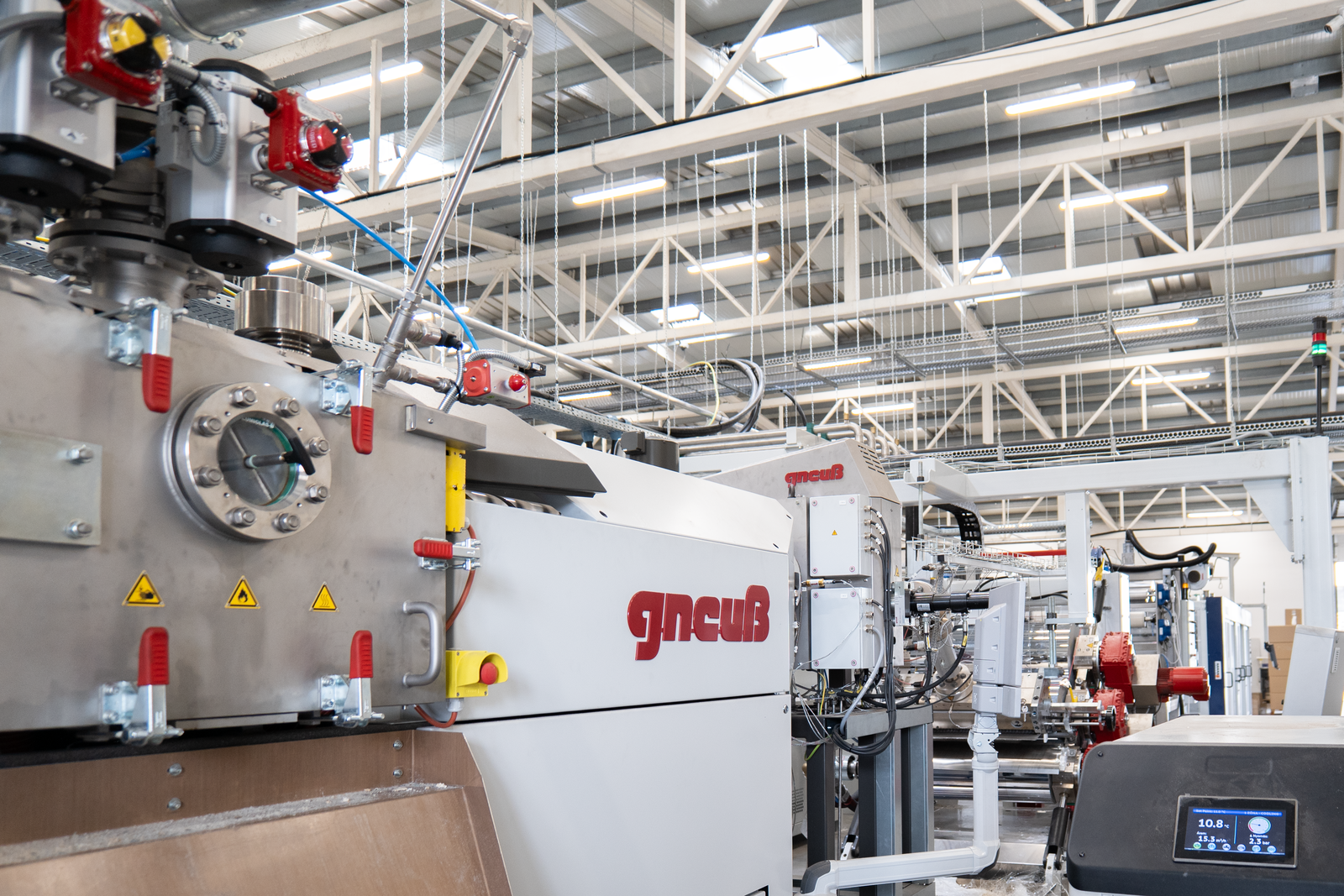
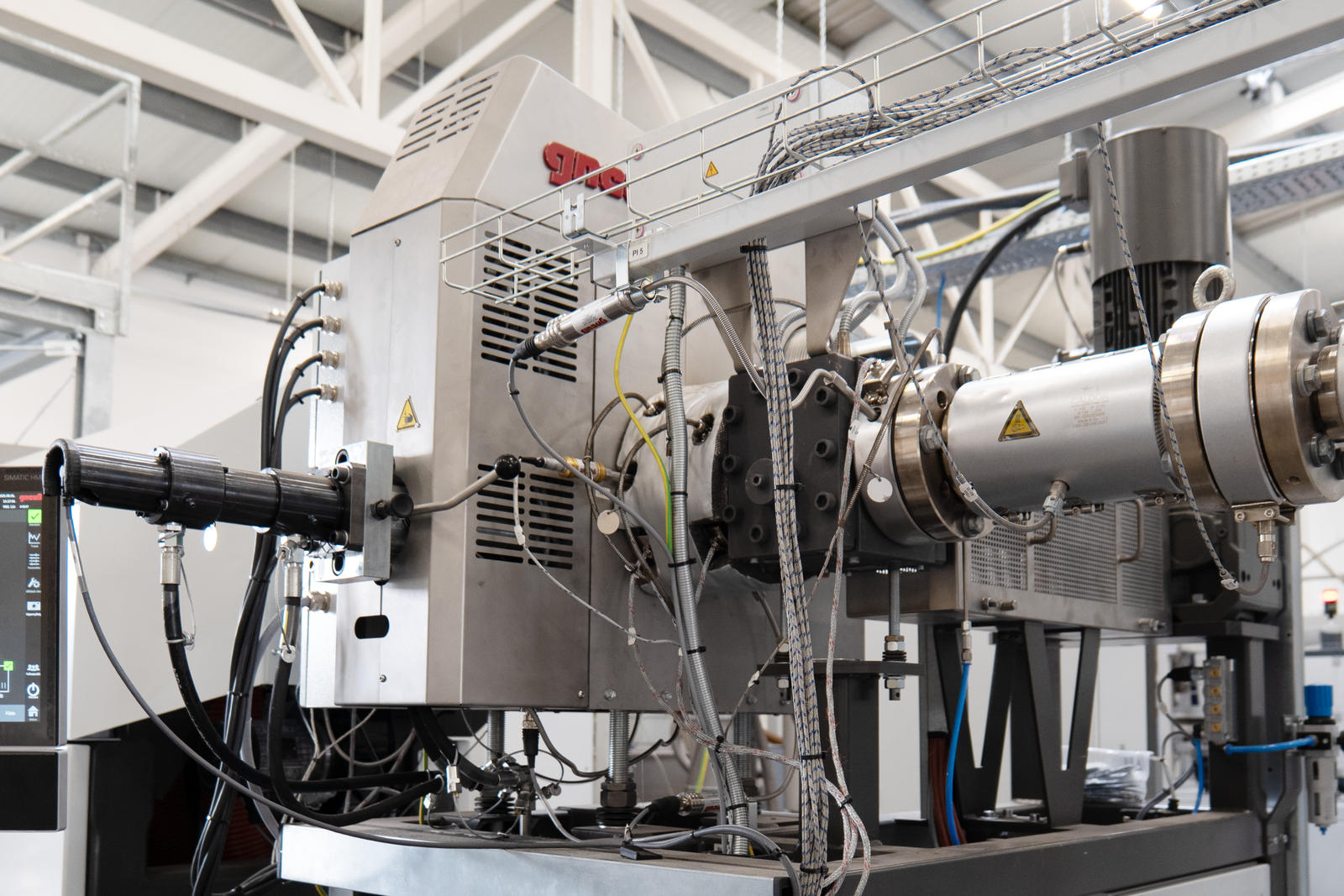
The company therefore looked for an extrusion solution capable of processing different PET feedstocks without upstream material drying while maintaining maximum energy efficiency. The choice was a Gneuss MRS 110 extruder with a throughput of up to 600 kg/h of PET. Since its commissioning in early 2025, the system has successfully met both requirements.
At the heart of the system is the patented Multi Rotation System (MRS) technology. Multiple satellite screws dramatically increase the melt surface area, enabling highly efficient devolatilisation and decontamination of the PET melt. As a result, virgin resin, bottle flakes and in-house production regrind can all be processed flexibly without the need for energy-intensive pre-drying.
The extrusion process has received FDA approval for the production of recycled PET intended for food-contact applications. In addition, EFSA approval for the customer-specific process has been applied for, with approval expected during 2026. This will enable the company to use food-grade recycled PET for international food packaging markets.
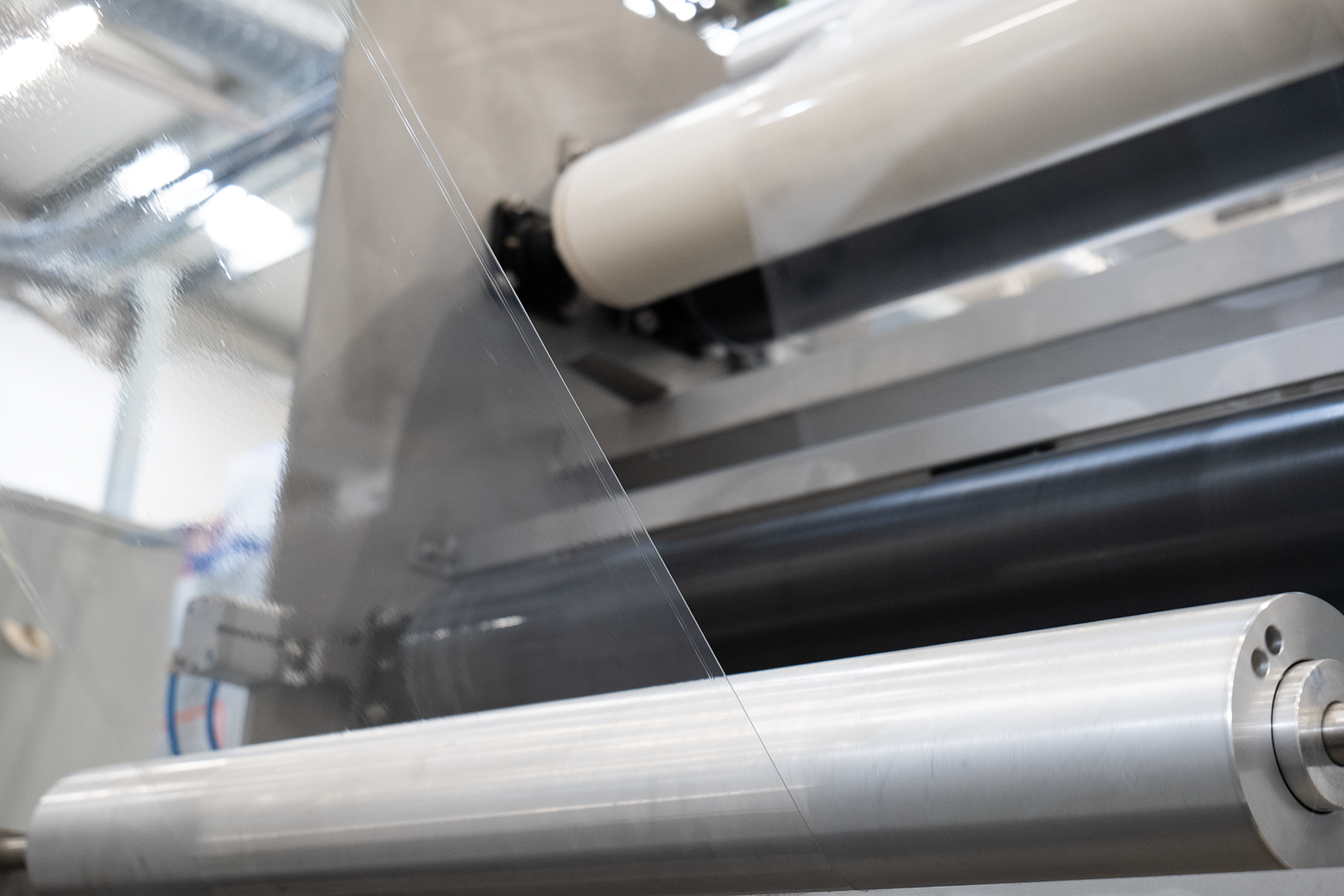
A gravimetric dosing system allows different material streams to be blended with high precision. A Gneuss RSFgenius rotary filtration system continuously removes solid contaminants from the melt, ensuring consistently high sheet quality. The sheet is then fed directly into the thermoforming lines via an energy-efficient inline process.
Since entering production at the beginning of 2025, the extrusion line has proven itself in daily operation. The combination of flexible raw material selection, elimination of energy-intensive material pre-drying and the energy-efficient inline process reduces overall energy consumption while increasing flexibility in raw material sourcing. As a result, the company now has the technical capabilities to increase the recycled content of its food packaging according to market requirements and to respond flexibly to future market developments and the evolving demands of the European circular economy.