
In extrusion, coating, and converting processes, product quality is directly linked to the uniformity of basis weight and thickness across the web. Even small deviations can result in material waste, inconsistent coating performance, or downstream processing issues that increase reject rates and reduce overall production efficiency.
Inline measurement as a key enabler for stable web production
Inline measurement systems address this challenge by capturing material properties such as basis weight and thickness continuously during production. Instead of relying on offline sampling, manufacturers gain real-time visibility into the process. This enables immediate correction of deviations and allows tighter control of target values across the entire web width and along the full production length. Additionally, machine downtime and time for start-up processes can be reduced to a minimum.
The result is a more stable process with reduced safety margins. Producers can run closer to specification limits without risking quality or a breach of tight set tolerance limits, which directly reduces material consumption and associated energy use. Especially in film extrusion and coating applications such as adhesive tapes or paper converting, this leads to measurable efficiency gains, improved product consistency, and more predictable downstream processing.
The ELTIM system: radiation-free measurement for continuous processes
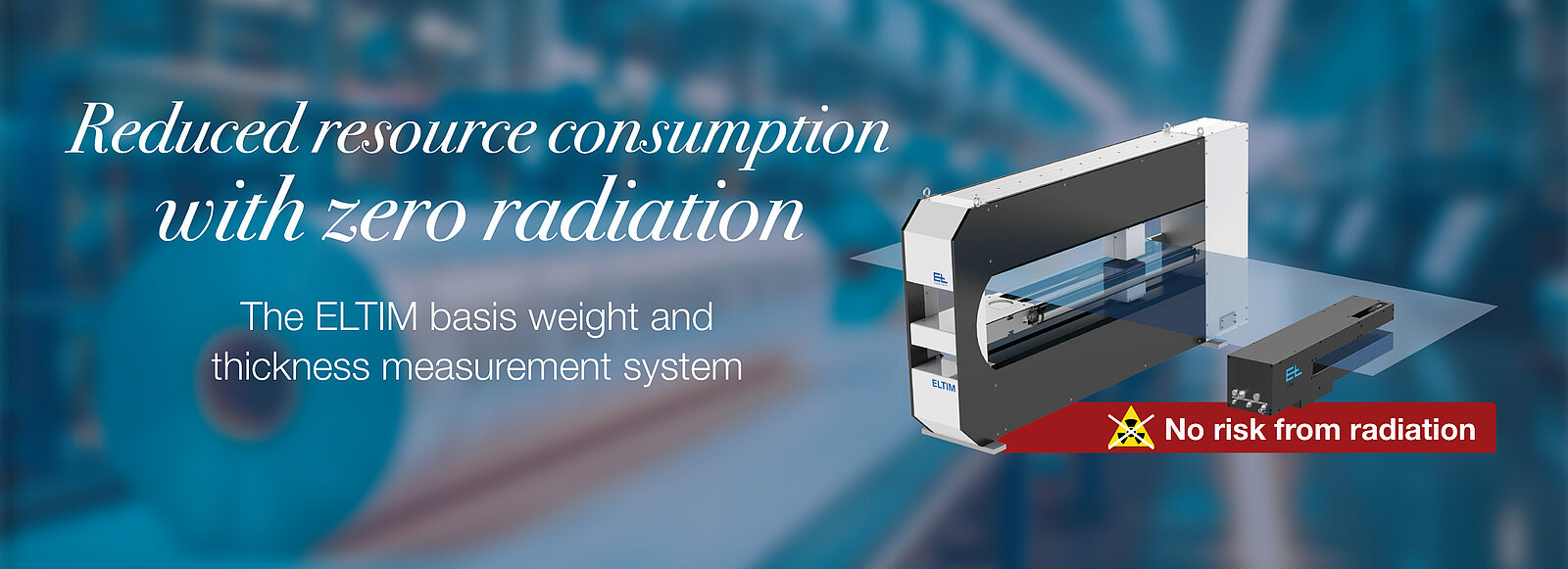
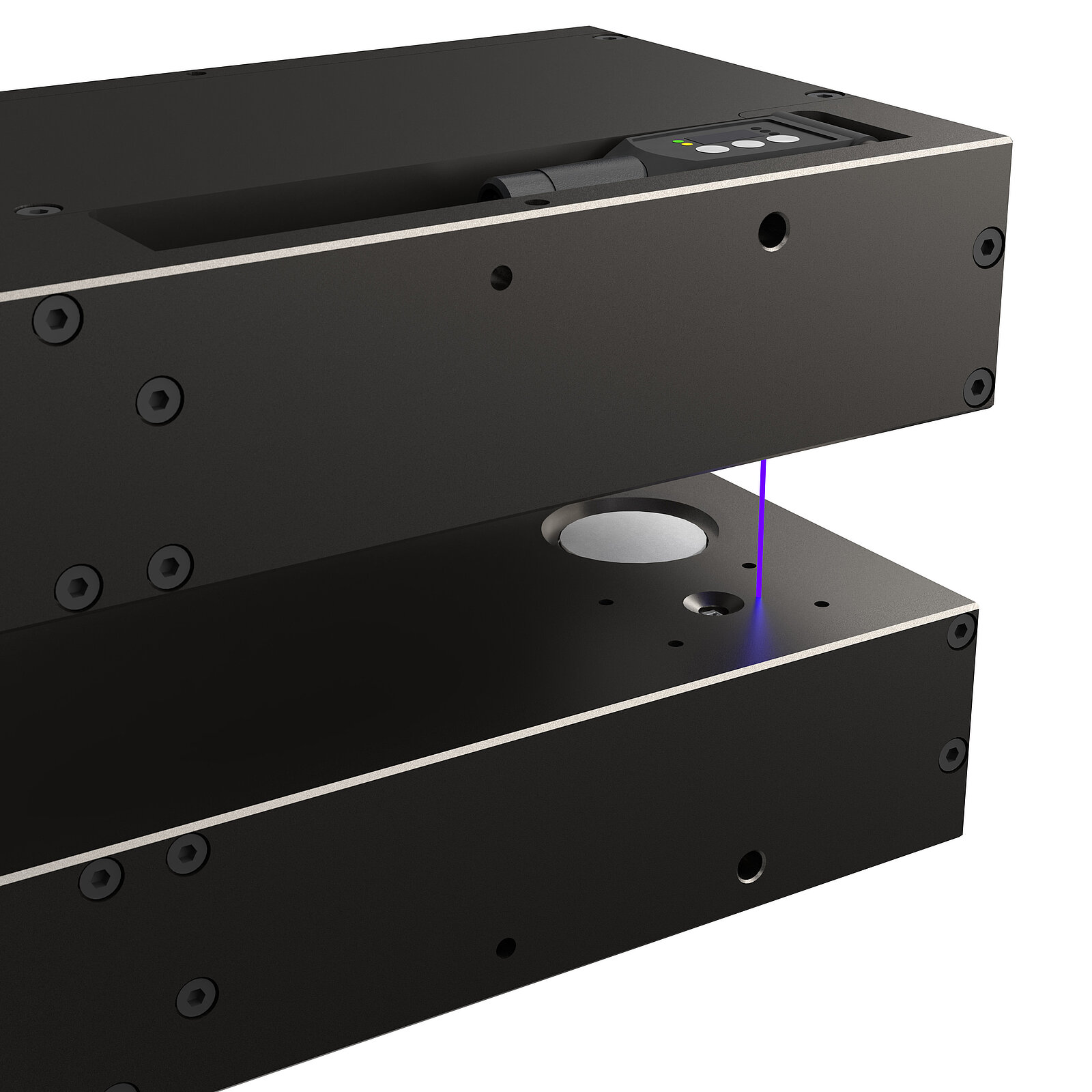
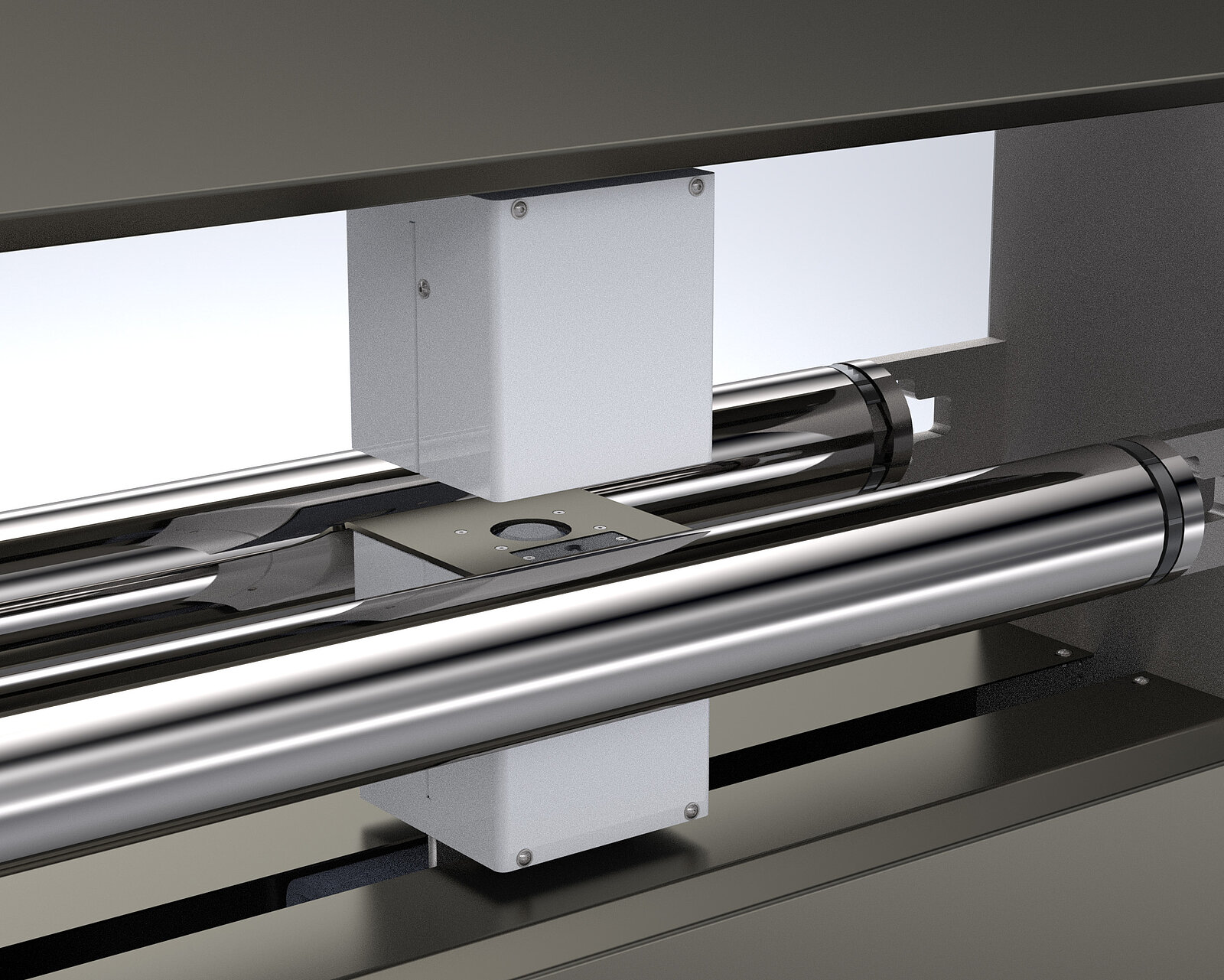
Erhardt+Leimer’s ELTIM system is designed for the inline measurement of basis weight and thickness in continuously moving webs. It uses ultrasonic transmission to determine material properties without contact. The system measures the absorption of ultrasonic signals through the material and calculates the basis weight and thickness based on the absorption and a calibration factor. A defining advantage of this approach is the complete absence of radiation. Unlike radiometric systems, ELTIM does not require X-rays or radioactive sources. This eliminates regulatory requirements, reduces necessary safety measures, and avoids long-term costs such as source replacement, licensing, and disposal. It also simplifies integration into existing production environments.
At the same time, the system delivers high accuracy, thanks to a small detection area and high measurement frequency. Integrated environmental sensors capture parameters such as temperature, humidity, and air pressure to ensure stable measurement conditions and trigger an automatic recalibration to compensate for altering environmental influences in mere seconds. Quick calibration routines also allow timely adaptation to changing materials, making this process faster than with radiometric systems. In practice, this means shorter setup times and higher machine availability in productions with frequent product swaps.
ELTIM O-frame: full-width control for production lines
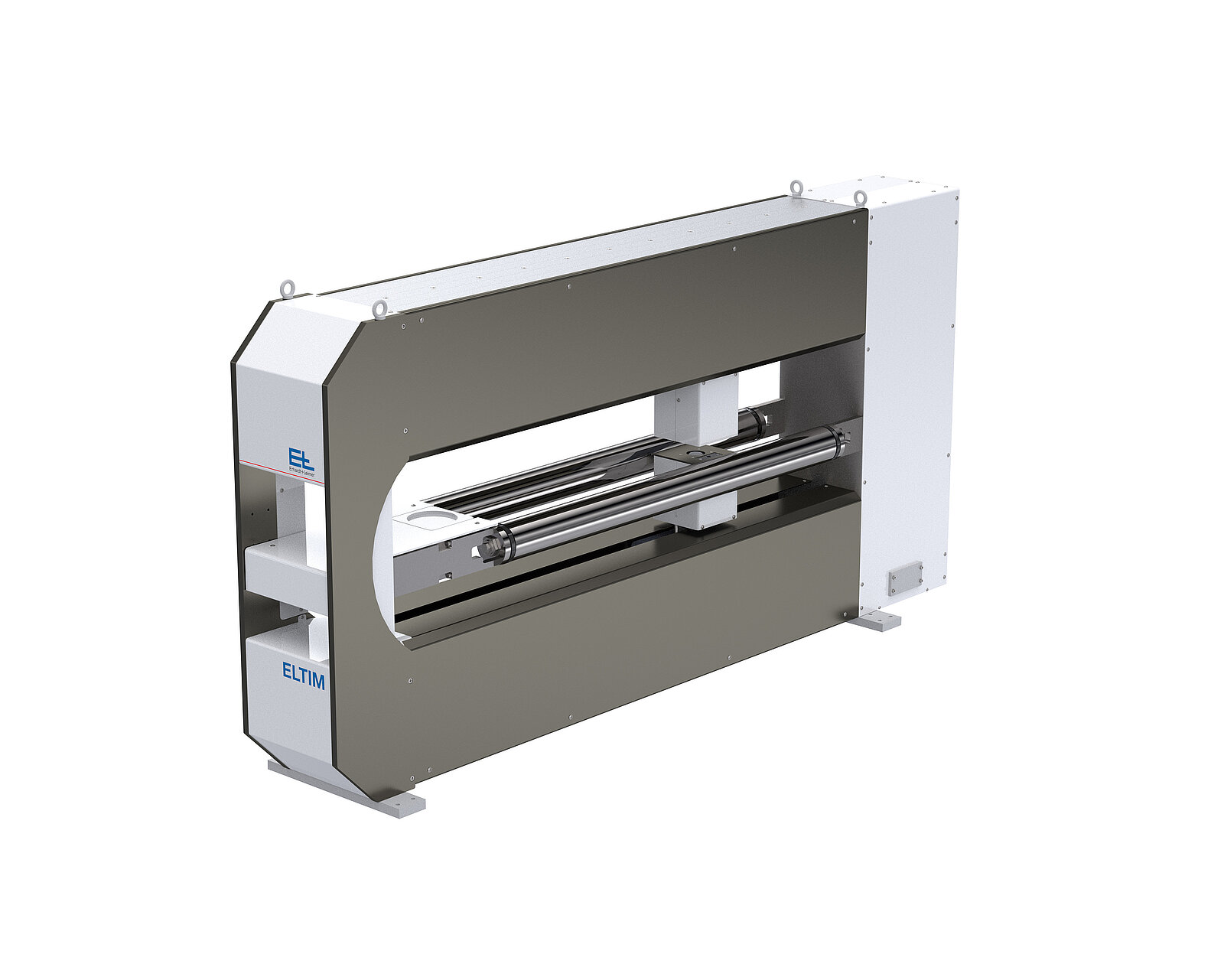
The ELTIM O-frame is designed for applications with large web widths, such as flat film extrusion and wide coating lines. A traversing sensor scans across the entire web, generating a complete cross-direction profile instead of measuring only fixed points. This enables precise detection of thickness or coating variations across the whole width as well as scanning for defects at the borders of the web. For example, in extrusion processes, the data can be used to adjust die bolts and correct thickness profiles in real time. In coating applications, it supports the control of doctor blades or applicator systems to ensure uniform coating weight and avoid defects.
The system is insensitive to color variations and remains stable even with fluctuations in web height, supported by integrated sensors and mechanical design elements such as support rollers. Continuous recalibration ensures reproducible measurement results and compliance with quality standards.
ELTIM C-frame: compact measurement for flexible integration
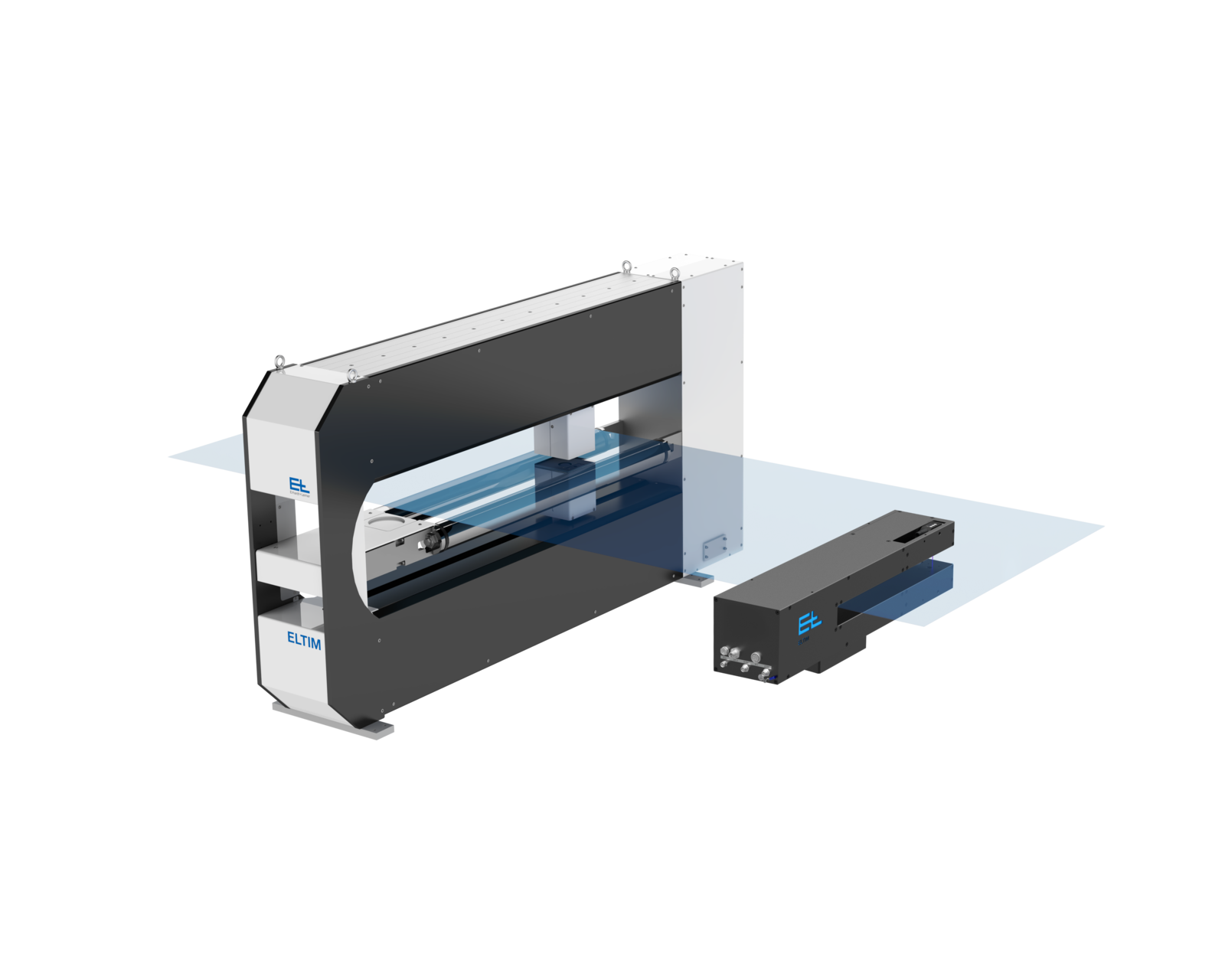
The ELTIM C-frame is optimized for applications where targeted measurement is sufficient, where machine layouts prevent the use of larger frames or a more economical model is preferred. Its compact design allows easy integration into existing extrusion, coating, and converting lines, including retrofit scenarios. Despite its smaller footprint, the C-frame uses the same ultrasonic measurement principle and delivers comparable accuracy. It can be used as a fixed measurement point or mounted on a traverse system to capture different positions across the web, depending on process requirements. The open design improves accessibility for operation, cleaning, and maintenance, while also supporting flexible use in both inline and offline environments such as laboratories for development, quality assurance or sample inspection.
ELTIM’s special features
One of ELTIM’s special features is the so-called same spot measurement, where measuring points at exactly the same position on the same measuring line are measured before and after a process step. This enables a particularly precise comparison of the basis weight and thickness for example before and after coating or cooling down and supports targeted optimization.
Another special feature is ELTIM’s lane and pattern detection. By using a contrast sensor, coated surfaces can be reliably identified even with intermittent coating on the underside or top of the material. Uncoated areas are not being measured while measurements from fringe areas between coated and uncoated areas are automatically excluded. This is particularly relevant in coating and adhesive applications, where pattern coatings must be monitored precisely to avoid quality deviations and ensure consistent product performance.
Find out more about the ELTIM system on the Erhardt+Leimer website: ELTIM system