Rigid PVC (PVC-U) is the standard material for producing films used in the thermoforming of pharmaceutical blister packs and technical packaging. Its combination of rigidity, transparency, dimensional stability and cost-effectiveness makes it the preferred choice, but processing it requires highly specialized expertise.
“PVC is probably one of the most challenging polymers to extrude,” explains Florio Roccon, founder and CEO of BG Plast. “The quality of the film depends not only on the formulation but also on the entire production line’s ability to tightly control temperature, pressure and cooling throughout the entire process.”
Formulation and process stability
PVC for blister packaging is generally supplied in the form of a dry blend, a mixture consisting of PVC resin, heat stabilizers, lubricants and processing aids. In the blister packaging industry, resins with a K-value between 57 and 60 are typically used, formulated to ensure good flow and excellent thermoformability.
The main challenge with this material is its limited thermal stability: above 190–200 °C, PVC tends to degrade, releasing HCl, which requires careful engineering of screws, barrels, heating systems and corrosion-resistant surfaces. Depending on the raw material used, production lines may employ twin-screw extruders for dry-blending or single-screw extruders with specialized geometries for pre-pelletized compounds.
Thin films, tight tolerances
In the pharmaceutical industry, film thicknesses generally range from 200 to 350 μm, with extremely tight tolerances, often within ±2%. Film uniformity is, in fact, critical for subsequent thermoforming: variations in thickness, internal stresses or surface defects can affect cavity geometry, sealing and the efficiency of packaging lines.
For products that are more sensitive to moisture, multilayer structures, such as PVC/PVDC or PVC/PE/PVDC, are also used, which require even more precise control over layer distribution and process conditions.
BG Plast technologies
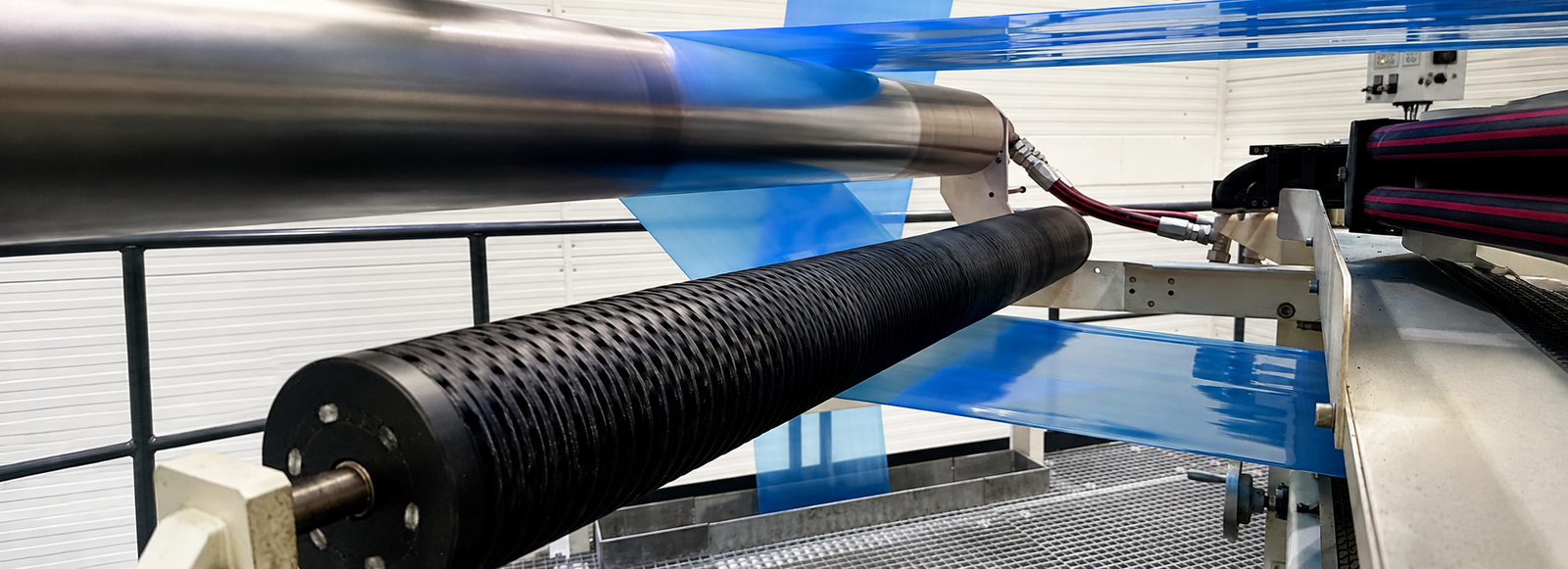
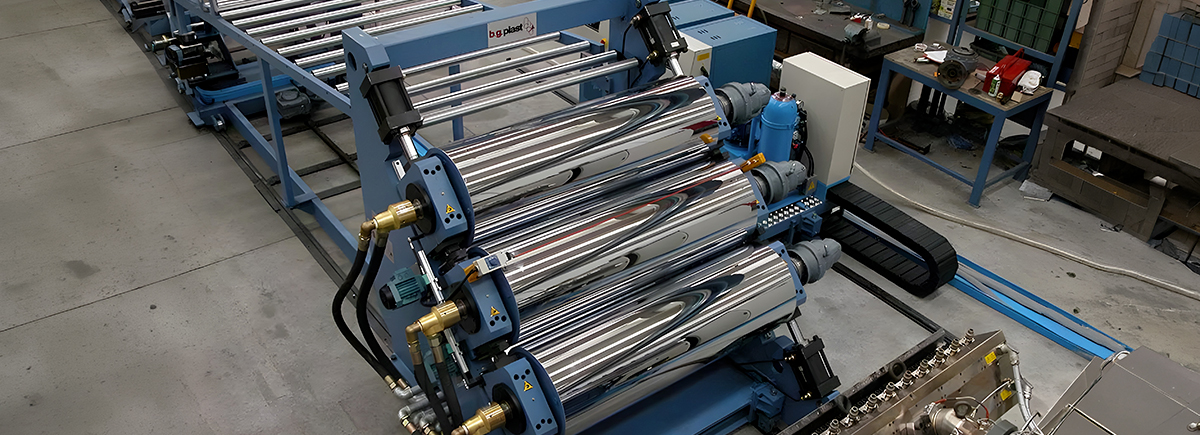
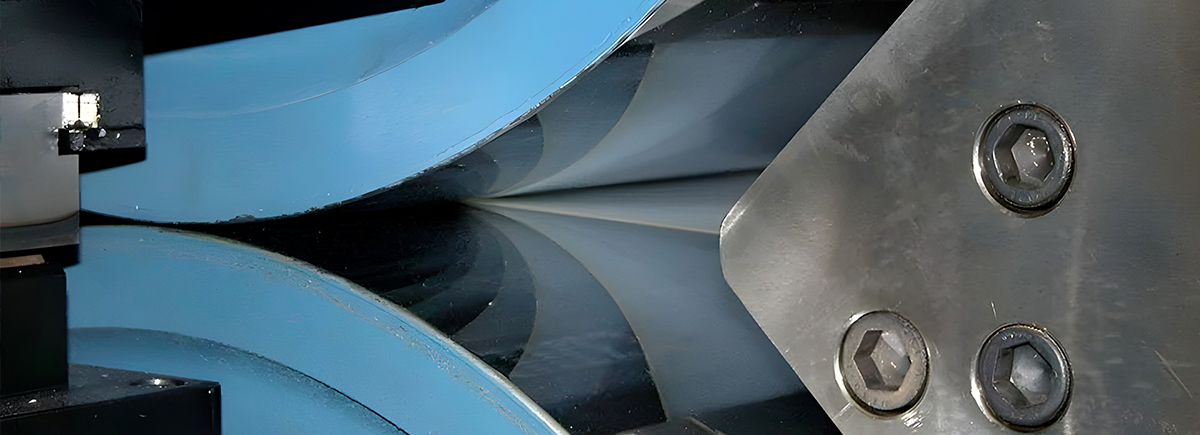
For over forty years, BG Plast has been developing complete lines for the extrusion of thermoplastic sheets and foils, designing extruders, flat die heads and calendering systems. Configurations dedicated to rigid PVC allow for the production of foils ranging from 0.15 to 1.80 mm, including co-extrusion with up to seven extruders, featuring independent cylinder drive systems and a Cross-Axis system for thickness adjustment during calendering.
“In PVC, every detail of the process affects the final result,” notes Roccon. “The goal is not simply to produce a film, but to ensure uniformity, stability and repeatability, characteristics that become essential when the material is intended for high-value-added applications such as pharmaceutical blister packaging.”
The evolution of packaging today demands increasingly high-performance films, multilayer structures and ever-tighter tolerances. The integration of material formulation, plant engineering and process control thus becomes one of the key competitive factors for manufacturers of films intended for the pharmaceutical and technical sectors.