In projects exposed to extreme environmental conditions, material selection is a critical engineering decision. High temperatures, intense solar radiation, saline soils, water scarcity and thermal variations require solutions able to maintain stable performance over time.
For this reason, HDPE geomembranes and high-density polyethylene dimpled membranes are widely used in civil engineering, environmental protection, water management and foundation systems, especially in regions such as the Middle East, North Africa and other demanding climates.
The technical role of HDPE geomembranes
High-density polyethylene is widely used in these applications thanks to its chemical resistance, impermeability, tensile strength and weldability. In hot climates, these properties are crucial: extruded HDPE maintains stable mechanical performance across wide thermal ranges and resists aggressive soils, sulphates, salts and prolonged uv exposure.
A waterproof HDPE geomembrane acts as a continuous barrier against liquids, gases and contaminants. This makes it ideal for water storage basins, irrigation canals, landfills, reservoirs and hydraulic works, where reducing infiltration losses improves infrastructure efficiency and durability.
Performance advantages in demanding environments
The technical advantages of HDPE geomembranes include high impermeability, resistance to chemical agents and saline environments, long service life, uv stability and excellent performance under high temperatures. With the correct formulation and stabilizer packages, HDPE geomembranes can preserve their mechanical properties for decades, reducing maintenance and improving the total cost of ownership of major infrastructure projects.
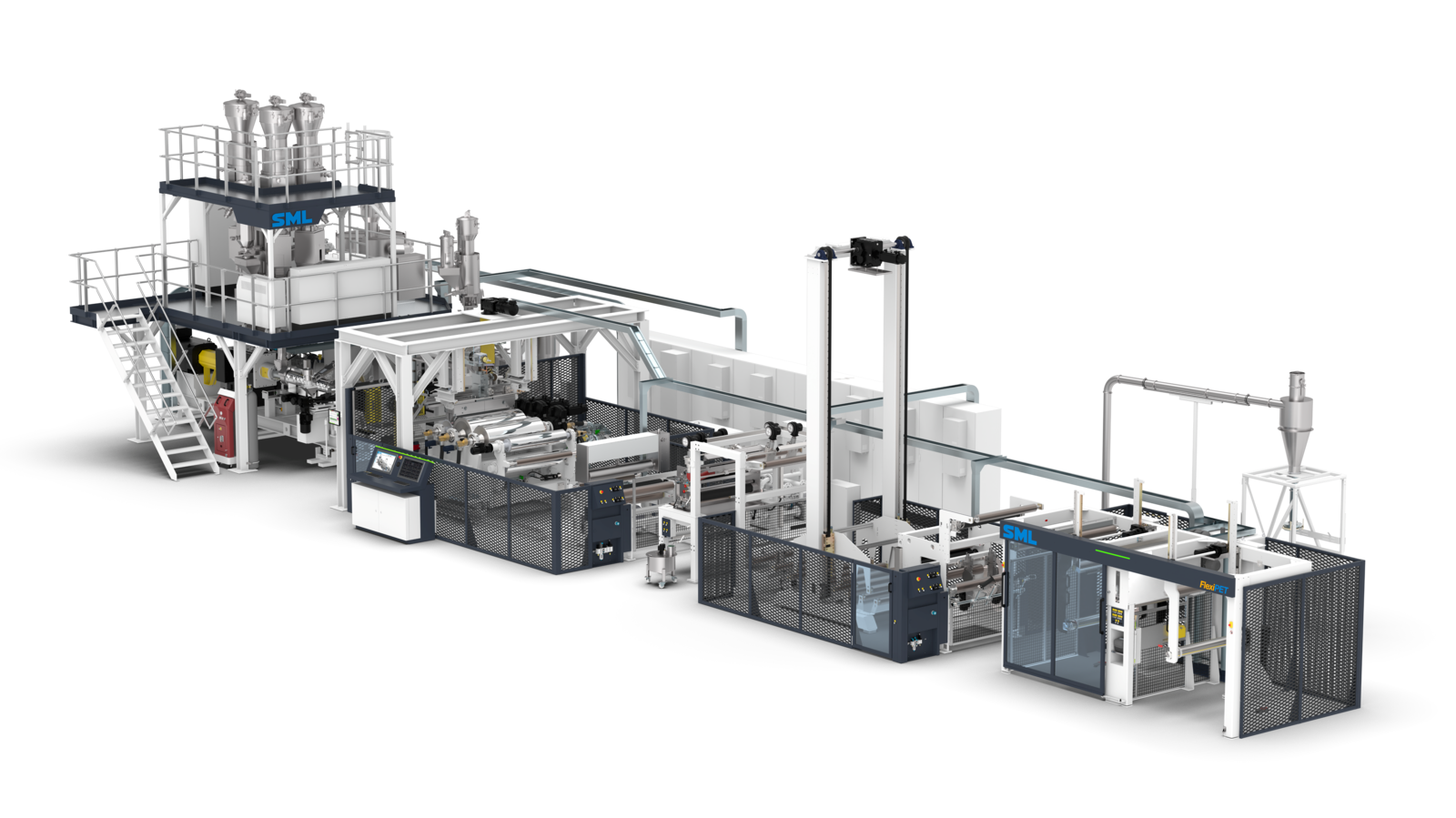
BG Plast extrusion lines for geomembranes process HDPE and LDPE, producing smooth or textured membranes according to the final application. Textured membranes are useful on slopes or ramps, where increased friction between layers is required. BG Plast systems can reach widths of up to 8,000 mm, outputs of up to 2,000 kg/h and thicknesses from 0.8 to 3 mm, reducing installation joints and improving the continuity of the waterproof barrier.
Dimpled membranes for protection and drainage
Alongside geomembranes, HDPE dimpled membranes provide a complementary function. While the geomembrane acts as a waterproofing layer, the dimpled membrane protects the system mechanically, improves drainage and creates a ventilated cavity around foundations and retaining walls.
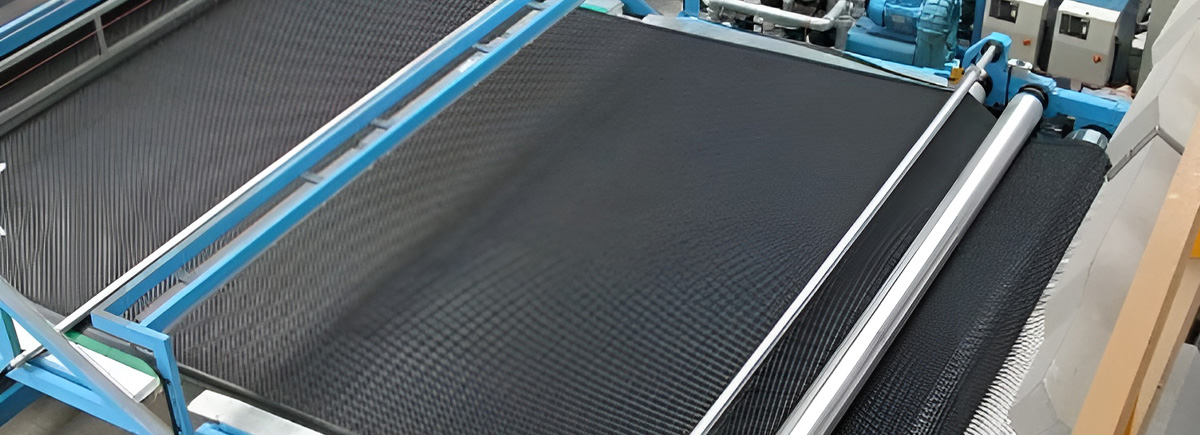
The dimpled geometry gives the membrane greater compressive strength than a flat sheet of the same thickness. It helps distribute backfilling loads, protects the waterproofing layer from punctures and creates channels that allow water to drain away, reducing hydrostatic pressure against underground structures.
Recycled materials and process stability
The air cavity generated by the dimpled profile also helps interrupt capillary rise and improve the durability of concrete structures.
For the production of dimpled membranes, BG Plast develops extrusion lines capable of processing post-consumer recycled materials, managing challenges such as variable flakes, contaminants, melt instability and filtration requirements. Through dedicated feeding systems, degassing stations, screw design, automatic screen changers and gear pumps, the process remains stable and reliable.
The value of extrusion technology
In extreme climates, the real value of HDPE geomembranes and dimpled membranes lies not only in the material itself, but in the precision of the extrusion technology behind it.